
Pepper Ball Guns 101: The Complete Guide to Less-Lethal Self-Defense
Pepper ball guns serve as reliable tools for those looking to defend themselves or their homes without resorting to lethal force. These launchers, powered by CO2 cartridges, shoot projectiles that either release an irritating pepper powder on impact or deliver a sharp, non-lethal sting with rubber rounds. In this guide, we'll cover the basics of how they operate, the various types and calibers available, ammo options, important legal factors, and tips for choosing and using one effectively for less lethal home protection, personal protection, or even business protection. Whether you're new to less-lethal defense or refining your setup, this should give you a solid starting point.
Remember, it is important to check with all local/state/federal laws before purchasing or using any product for self-defense. Lethal or less lethal, you are responsible for knowing the law. Okay, now that we have that fun disclosure out of the way, let's talk Pepper ball guns.
What Is a Pepper Ball Gun?

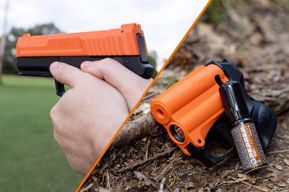
At its core, a pepper ball gun is a launcher designed to fire rounds that deter threats without causing permanent harm. They come in pistol, revolver, or shotgun-like designs, and most rely on CO2 cartridges for power. The goal is simple: provide a step up from basic pepper spray while staying far from the risks of traditional firearms. In any self-defense situation, the number one rule to remember is to create distance. With a pepper ball gun, you are more accurate and more persuasive at a distance before they get close, and if they are close to you, the impact is so strong that they will likely stop immediately and flee from the pain of impact.
Key features of a pepper ball gun include:
- Replaceable CO2 cartridges for consistent propulsion.
- Non-lethal ammo, like pepper-filled projectiles that burst on contact or solid rubber balls for impact.
- Versatile styles, from pocket-sized pistols to more substantial long guns suited for property protection.
- A balanced approach to self-defense, filling the gap between sprays and guns.
- Often compatible with accessories such as red dot optics, holster compatible, or even a mounted light
We've found these to be particularly useful for everyday folks who want something effective but manageable. If you're browsing options, our less-lethal self-defense page has models that fit a range of needs.
How Pepper Ball Guns Work
The mechanics behind pepper ball guns are straightforward, which is part of what makes them accessible. Here's how it typically goes:
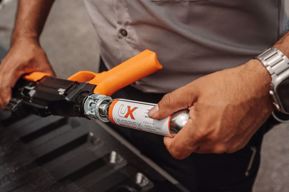
- Insert a CO2 cartridge to power the system.
- Load the rounds into the magazine or cylinder.
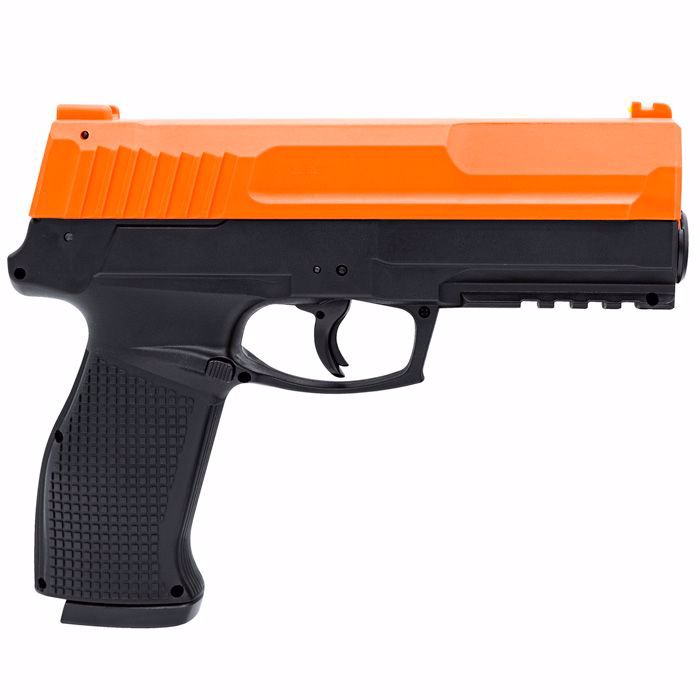
- Pull the trigger to release a burst of gas, propelling the projectile. On some models of pepper ball guns you must strike a button on the gun which punctures the CO2 cartridge and readies the gun to fire, like the P2P HD50 Pepper Ball Handgun. This extra step to ready the gun to fire can be viewed as an additional safety mechanism or an extra step. The P2P 68P Pepper Ball Handgun, however, does not require this extra step and instead, when the trigger is pulled, the CO2 is pierced, and the round is shot. This comes down to your personal preference.
- The round exits the barrel and heads toward the target.
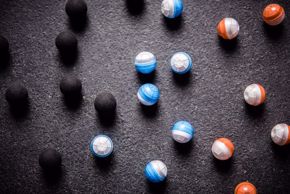
- On impact: Pepper rounds, like the Core Defense Pepper Ball Ammo, explode, releasing an irritant cloud; rubber less lethal rounds hit with blunt force. The Core Defense rounds that are pepper or rubber both include a small steel ball within to improve shooter accuracy and less lethal impact.
Ranges can differ based on the model—always check the specs for yours. One thing we've noticed in testing is that pepper rounds work best when you're mindful of wind or tight spaces, as the powder can spread unexpectedly. For more on our specific models, like the HDP 50 pepper ball pistol or HDX pepper ball shotgun, visit our product listings.
Types of Pepper Ball Guns
Pepper ball guns come in a few main styles, each with its own strengths depending on how you plan to use them.
Pistol-Style Launchers:
Pepper ball pistols are generally compact, easy to handle, and great for quick access. They're popular for personal carry or keeping in a drawer at home, in the car, or at the office. Keep in mind the capacity of the pepper ball handgun. Some like the new P2P 68P Pepper Ball Launcher hold up to six shots. Five shots are very common in the industry.
Shotgun or Long-Gun Style Launchers:
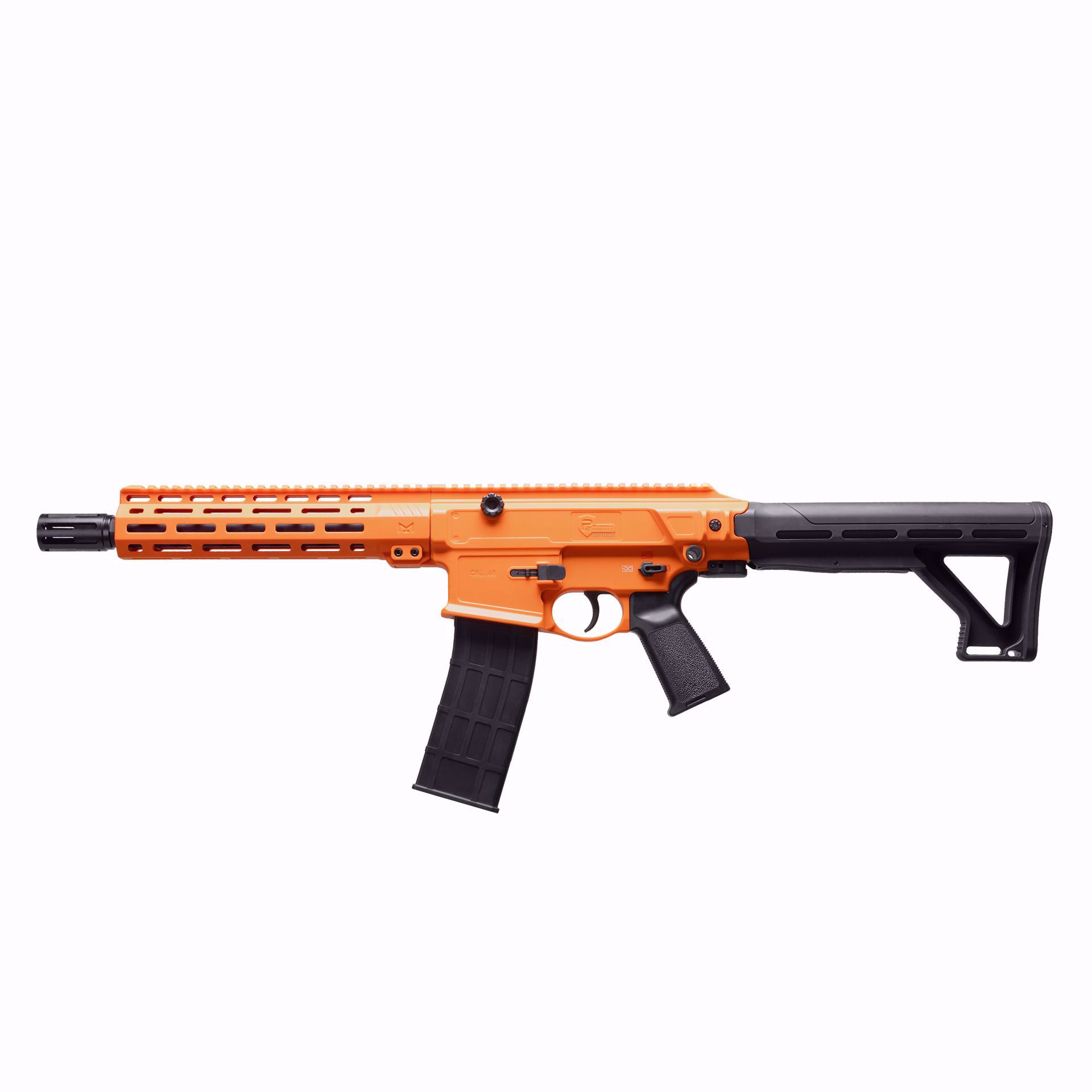
Built for stability with longer barrels and higher capacity, these shine in home defense scenarios where accuracy matters. Additional benefits of these products is that they can also deliver with a higher force than a pepper ball pistol. When you want more capacity, more long-distance accuracy, and something that packs a harder punch then a less lethal pepper ball rifle, like the 68 Caliber Defensor from P2P is a great option.
When it comes to calibers, .50 is often lighter and snappier for most pepper ball pistols, while the .68 caliber packs more punch, delivers extra powder, and hits with extra energy. The right choice boils down to your setup—our team at Prepared 2 Protect can help narrow it down. Explore our pistol and shotgun options on the less-lethal self-defense page.

Pepper Ball Ammo Explained
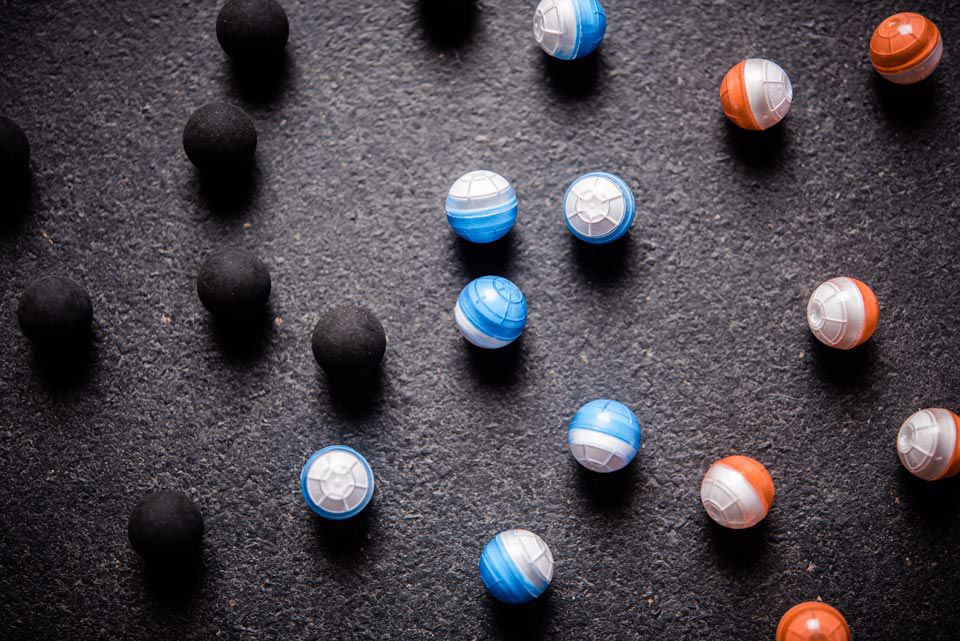
Getting the ammo right is key to making your launcher perform as expected. More importantly, understanding the value of different round options can impact how you setup your less lethal gun. Here's a breakdown of the main types:
Irritant (Pepper) Rounds:
These are filled with a powder that bursts on hit, causing eye and breathing discomfort to stop a threat in its tracks. They're excellent for situations where you need range plus a chemical edge. The Core Defense pepper balls are unique because they include a perfectly centered steel ball surrounded by 7%PAVA powder irritant. This makes the round more accurate to shoot and has a higher impact on the target, enough to make any troublemaker rethink their next move.
Rubber Impact Rounds:
These are solid projectiles that deliver a strong thump without any dispersal. Perfect for kinetic deterrence when chemicals aren't ideal.
Practice and Inert Rounds:
Great for drills, we recommend everyone use inert powder rounds to test functionality and to get comfortable with the product. Safely practice shooting to get a feel for aiming and firing without the irritant effects. These practice rounds still hurt and should be treated with care and respect.
With practice or pepper ball rounds, you need to be careful to store them in a cool, dry spot, and keep an eye on expiration dates. We've stocked a variety of rounds to match our launchers; head over to our ammo section for details.
Advantages of Pepper Ball Launchers
What sets pepper ball launchers apart in the world of self-defense? For starters, they offer better reach than standard sprays, thus letting you engage from a safer distance. You also get flexibility to switch between pepper for irritation or rubber for impact based on the scenario. For families or anyone cautious about escalation, they're a smart non-lethal alternative that minimizes risks compared to firearms.
In our experience, these benefits make them a go-to for home security, personal defense, and protecting a property like a business. Pair one with proper training, and you've got a solid layer of protection. There is no right or wrong solution between choosing a pistol or long gun version of a pepper ball launcher, and there is no wrong answer on chooosing pepper ball rounds or kinetic rounds. It is what works best for you and your needs. Some of our customers will even load their pepper ball launcher (pistol, rifle, or shotgun) with both kinetic and pepper ball rounds. It's all personal choice.
Choosing the Right Pepper Ball Gun
Picking a launcher isn't one-size-fits-all. Consider:
- Your main purpose? Home defense might call for a long gun, while portability favors a pistol.
- Caliber and ammo supply? Ensure .50 or .68 rounds are easy to get and legal where you are.
- How it feels in the hand? Weight and grip can make a big difference.
- Capacity and reload ease? Higher mags are handy for extended situations.
- Sighting features? Look for models with good irons or optic mounts.
- Support for training? Opt for ones with guides or courses available.
Safety & Responsible Use
Safety comes first with any defense tool. Start with thorough training: Practice loading, aiming, and reloading in a controlled setting. Be aware of how pepper powder might affect others nearby, including pets or family in adjacent rooms. it's powerful stuff in enclosed areas. Always store your launcher and ammo securely, away from kids or anyone unauthorized. And remember, laws vary widely, so verify local rules before buying or using. This isn't legal advice, but it's worth double-checking with official sources.
Frequently Asked Questions (FAQ)
Are pepper ball guns lethal?
No, they're built to be less-lethal, aiming to deter without fatal outcomes. That said, close-range misuse could lead to injury, so stick to guidelines and get trained.
How far can pepper ball guns shoot effectively?
It depends on the model and caliber—check the specs for yours. Generally, they outrange sprays, but factors like wind play a role.
Can felons or prohibited persons purchase pepper ball launchers?
This varies by location and situation—consult laws or a professional for your case.
How should I train with a pepper ball launcher?
Use inert rounds for safe practice, then move to controlled live sessions. Manufacturer tips or courses are invaluable for building confidence.
Do pepper balls leave permanent marks or stains?
The powder might leave a temporary residue that's cleanable, and rubber can mark surfaces. Nothing permanent if handled right.