
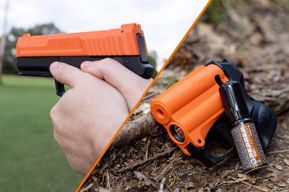

When people begin researching less-lethal self-defense tools, one of the first questions that comes up is surprisingly simple:
Are pepper ball guns legally considered firearms?
The answer depends on how the law defines a firearm in the first place. In a recent video, Bill Kirk of the popular YouTube channel Washington Gun Law explores this exact issue by examining how several states legally define firearms and comparing those definitions to devices such as pepper ball launchers.
Understanding this distinction is important because it can determine how a device is regulated, transported, or used for personal protection. Prepared2Protect is sharing Kirk’s video because it highlights a legal concept that many people overlook when evaluating non-lethal self-defense options. Below, we summarize key points from his discussion and provide additional context about pepper ball launchers and responsible use.
Note: The commentary referenced in this article reflects Bill Kirk’s interpretation of legal concepts and should not be considered legal advice. Laws governing self defense tools vary by state and locality. Individuals should review their local statutes or consult qualified legal professionals for guidance.
Why the Legal Definition of a Firearm Matters
Most people instinctively think of firearms as devices that fire bullets using gunpowder. While that basic description is accurate, legal definitions can be more precise. Under many state statutes, a firearm is defined as a device that expels a projectile through the force of an explosion or combustion. This distinction becomes important when discussing tools like pepper ball launchers, which often use compressed air or CO₂ rather than gunpowder. As Bill Kirk explains in the video, the legal definition used by many states focuses heavily on how the projectile is propelled, not simply whether a device resembles a firearm. That difference can influence whether certain defensive tools are subject to the same legal restrictions as traditional guns.
How Some States Define Firearms
To illustrate this concept, Kirk examines several states with different regulatory environments. He compares two states often viewed as having stricter firearm laws, California and New York, with states that tend to have broader protections for self-defense rights, including Texas and Florida. Although the legal language varies slightly by state, many firearm statutes share a similar core definition. For example, California law defines a firearm as a device designed to be used as a weapon that expels a projectile through a barrel by the force of an explosion or other form of combustion. That wording is important because it emphasizes the role of combustion, which is the burning of gunpowder or similar propellant.
Devices that use compressed gas instead of combustion may fall outside that definition depending on how the statute is interpreted. New York uses similar language in many of its firearm regulations, again focusing on devices that fire projectiles through explosive force. Because pepper ball launchers typically rely on CO₂ propulsion rather than gunpowder, they often occupy a different legal category. However, that does not mean they are completely unregulated. Some states impose restrictions on the types of projectiles that can be used or how such devices can be carried.
How Pepper Ball Launchers Work
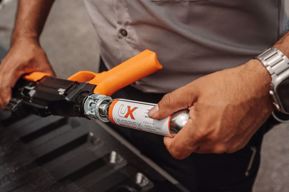
To understand why pepper ball guns may fall outside some firearm definitions, it helps to understand how they function. A pepper ball launcher uses compressed gas, usually CO₂, to propel small spherical projectiles down a barrel. These projectiles can contain different payloads, including:
- Pepper powder
- Rubber impact balls
- Marking rounds are used for identification and practice
When a pepper projectile strikes a surface, it breaks open and disperses powdered capsaicin, the same irritant compound used in pepper spray. The resulting cloud can cause:
-
Intense eye irritation
-
Involuntary closing of the eyes
-
Coughing or difficulty breathing
-
Temporary disorientation
The goal is not to cause permanent harm but to incapacitate an attacker long enough for a defender to escape. Because these launchers use compressed gas rather than explosive propellant, they are often categorized differently from traditional firearms.
The Growing Interest in Less-Lethal Self Defense Tools
In recent years, there has been growing interest in defensive tools that provide protection without the risks associated with lethal force. Many people are exploring less-lethal alternatives to firearms, including:
- Pepper spray
- Pepper gel
- Stun devices
- Pepper ball launchers
These tools aim to give individuals the ability to stop or deter an attacker while reducing the likelihood of permanent injury. Pepper ball launchers in particular appeal to some users because they combine the range and targeting capability of a launcher with the chemical deterrent effects of pepper spray. Depending on the model, many pepper ball launchers can reach distances of 50 to 60 feet, significantly farther than traditional handheld pepper spray. That additional distance can provide valuable reaction time in a defensive situation.
Important Legal Considerations
Even if a pepper ball launcher is not legally defined as a firearm in certain jurisdictions, that does not automatically mean it can be carried or used without restrictions. Different states regulate defensive tools in different ways. Some jurisdictions restrict pepper projectile ammunition, while others may regulate how these devices are transported or used.
For example, certain states limit the use of chemical irritant projectiles but may still allow launchers that fire rubber balls or marking rounds. California is often cited as an example where pepper projectiles may face restrictions, while other types of non-chemical projectiles may still be permitted depending on the configuration.
Because laws evolve over time and may differ between municipalities, it is essential to review local regulations before purchasing or carrying any defensive device. Responsible owners should always confirm the rules that apply in their specific state or city.
Understanding Projectile Options
One advantage of modern pepper ball launchers is their flexibility. Many systems are designed to work with different types of projectiles, allowing users to adapt their defensive setup to legal requirements or personal preferences. Common projectile types include:
Pepper balls: These contain powdered capsaicin and are designed to disperse on impact, creating an irritant cloud.
Rubber impact rounds: Solid projectiles designed to deliver a painful but generally non-penetrating impact.
Marking rounds: Projectiles filled with colored powder are used to mark an attacker for identification.
Prepared2Protect offers several launcher kits designed around these options. For example, the P2P Secure 68P Pepper Defense Kit includes a full-size launcher paired with pepper rounds designed for personal defense. For areas where chemical projectiles may be restricted, the P2P Secure 68P Impact Defense Kit provides a configuration that uses rubber balls and marking rounds instead. These alternatives allow individuals to choose a setup that aligns with both their personal safety strategy and local legal requirements.
Pepper Gel as a Compact Defensive Option
While pepper ball launchers provide extended range, some individuals prefer a smaller defensive device for everyday carry. Pepper gel is a popular alternative. Unlike traditional aerosol pepper spray, pepper gel is thicker and travels in a more focused stream. This design can reduce the chance of blowback in windy conditions and may allow for more precise targeting.
Prepared2Protect offers the P2P PGS II Pepper Gel Flashlight Defense Pistol, which combines pepper gel delivery with an integrated flashlight for enhanced visibility in low-light situations. As with pepper ball launchers, the availability of pepper gel products may vary depending on local laws.
Responsible Use and Personal Safety
Regardless of the defensive tool someone chooses, responsible use is essential. Self-defense experts consistently emphasize that situational awareness and avoidance are the most effective safety strategies. Tools like pepper spray, pepper gel, and pepper ball launchers should be viewed as part of a broader personal safety plan that may include:
- Training and practice
- Understanding local self defense laws
- Maintaining awareness of surroundings
- Prioritizing de-escalation whenever possible
Defensive tools are designed to provide an option when a threat cannot be avoided, but they should never replace good judgment.
Why Education Matters
One of the key takeaways from Bill Kirk’s video is that many people assume all projectile-launching devices are treated the same under the law. In reality, legal definitions can be surprisingly nuanced. Whether a device is considered a firearm may depend on factors such as:
- The propulsion mechanism
- The type of projectile used
- How the device is classified under state statutes
Understanding these distinctions can help individuals make more informed decisions about the defensive tools they choose to carry. Educational resources like Kirk’s analysis help highlight these legal details, encouraging responsible and informed ownership.
Final Thoughts
Pepper ball launchers represent a rapidly growing category of less-lethal self-defense tools. Their ability to deliver chemical irritants or impact rounds at extended distances has made them an appealing option for many people exploring alternatives to traditional firearms. However, as Bill Kirk explains in his analysis, understanding how the law defines a firearm is important for evaluating these devices.
Because pepper ball launchers typically use compressed gas instead of combustion, they may fall outside certain firearm definitions in some jurisdictions. At the same time, other regulations may still apply depending on the type of ammunition used. For anyone considering a pepper ball launcher or other personal defense tool, the most important step is education. Understanding how these devices work, how they fit into the legal framework, and how they should be used responsibly can help individuals make safer and more informed decisions about personal protection.
Prepared2Protect encourages responsible ownership and informed decision-making regarding personal defense. Discussions like the one presented in Bill Kirk’s video help provide valuable insight into the legal considerations surrounding less-lethal defensive tools.