

Quick Answer: What Is the Best Non-Lethal Home Defense Option?
There's no one-size-fits-all "best" non-lethal home defense tool. It all comes down to the layout of your home, how far away you need to engage a threat, your comfort level with training, local laws, and how much you prioritize keeping things contained.
- For super close-quarters encounters: Pepper spray or pepper gel.
- For more distance and standoff: Pepper ball launchers.
- For chemical-free stopping power: Rubber impact rounds.
- For stopping trouble before it starts: Alarms, smart lighting, and door reinforcements.
The smartest home defense setups aren't about a single gadget—they're layered defenses that work together. For a complete blueprint, check out our Complete Homeowner’s Guide to Non-Lethal Self-Defense.
Why Homeowners Are Turning to Non-Lethal Options
These days, more homeowners want protection that's effective without the finality of a firearm. Non-lethal tools fill that sweet spot: they're powerful enough to stop a threat in its tracks but avoid the life-altering fallout of lethal force. It's a big deal for families with kids, apartments with thin walls, or neighborhoods where neighbors are just a fence away.
That said, "less-lethal" doesn't mean risk-free. These options demand clear thinking, good judgment on distances, and some hands-on practice. Picking the right one means getting real about what it can (and can't) do in the heat of the moment.
Close-Range Options: Pepper Spray and Pepper Gel
Pepper spray is still the go-to for most people—it's simple, affordable, and packs a punch. It shoots out a mist of oleoresin capsicum (OC), the stuff that makes peppers spicy, right from a compact canister. Hit someone in the eyes, face, or lungs, and they'll be blinded, coughing, and utterly disoriented for minutes. Its biggest win? Ease of use. No complicated mechanics, just point and spray. Perfect for a tense moment in a hallway or at your bedroom door. But here's the catch: it's short-range, usually topping out at 5–10 feet, and that mist can linger in the air, filling up a small room and potentially affecting everyone inside. Not ideal if you've got family nearby.
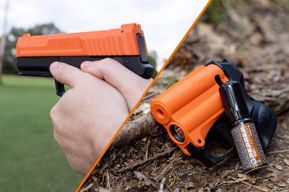
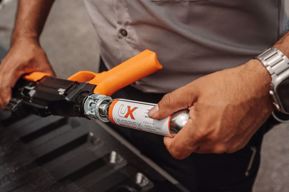
Enter pepper gel. It's the smarter cousin. It's thicker, like a stream of sticky gel instead of a cloud. It sticks to the target, reduces messy drift, and minimizes blowback in tight spaces like apartments or condos. For example, the P2P PGS II Pepper Gel Gun allows you to aim your pepper gel like a handgun and has an integrated flashlight. Gel still shines in close encounters, though it asks for steadier aim and doesn't magically extend your range. In multi-unit living, it's often the top pick for control. In a bigger house, it works great as your backup plan.
Distance and Control: Pepper Ball Launchers
If you need to reach out and touch someone from farther away, pepper ball launchers are game-changers. These CO2-powered devices launch little balls that explode on impact, releasing a burst of irritant powder right where it counts. The standout feature? Range. Depending on the model and ammo, you can engage threats from way beyond spray distance, think long hallways, staircases, or even from a safe spot on your porch. You have lots of options as well, depending on your need and comfort level:
- A pepper ball rifle launcher like the P2P Defensor 68C is an AR-style rifle that fires a 68-caliber pepperball or rubber ball at high speed and has an over 20-round capacity. For long-distance defense and high capacity, this is your best option.
- You also have the option of a pepper ball shotgun launcher like the P2P HDX in 68 caliber. This, too, is great for higher-capacity and longer-distance self-defense.
- Are you looking for a full size handgun pepper ball launcher that is less expensive than some other popular brands and it also carrys more pepper balls and shoots faster? Check out the P2P Secure 68P Pepper Ball Handgun.
Unlike sprays, the irritant doesn't start spraying from your hand; it activates at the target. It's more precise indoors, though drafts can still spread things around a bit. Bonus: Many launchers let you swap in rubber rounds, inert practice ammo, or different irritants. It's like having a versatile toolkit for different scenarios. Downsides? They're bulkier, need regular practice to stay sharp, and storage is key (especially around kids). Plus, rules vary by state more than with basic sprays.
For folks with roomier homes and a bit of training time, these open up a whole new level of defense.
(For the nitty-gritty on how they work, dive into our Pepper Ball Guns 101 guide.)
Chemical-Free Deterrence: Rubber Impact Rounds
Want to skip the chemicals altogether? Rubber rounds deliver a solid thump of kinetic energy instead of burning eyes or lungs. Fired from the same launchers as pepper balls, they use blunt force to halt an aggressor cold. No airborne irritants means zero worries about sensitive lungs or poor ventilation—huge for families with allergies or asthma. But they come with their own rules: Get the distance wrong, and you risk real injury. They demand solid aim and regular practice to be effective.
These aren't "gentle" options; they're just irritant-free. In open areas like garages, backyards, or driveways, they let you create distance without the chemical mess. A great choice for rubber balls is the T4E Self Defense Rubber Balls.
Prevention Before Confrontation: Passive Layers
The best defense? Never needing to defend at all. Think motion-sensor lights that flood your yard at night, solid-core doors with deadbolts, doorbell cameras, and blaring alarms. These aren't afterthoughts—they're the first line that scares off intruders before things get physical. They buy you time, shift the odds in your favor, and often make active tools unnecessary. Skip them, and you're gambling on a quick draw when a little prevention could avoid the whole mess. The pros combine all of it: eyes on the perimeter, early warnings, and a ready response.
Matching Tools to Real Homes
Your home's layout should dictate your choices—because a studio apartment isn't a farmhouse. In apartments or townhomes, thin walls and shared air mean you need tight control. Pepper gel, beefed-up doors, and loud alarms are a winning combo to keep things from spilling over. Suburban houses with stairs, long halls, and multiple doors? A launcher for reach, gel as a sidearm, and outdoor lights for early alerts create a solid web of protection. Out in the country? Wind, open fields, and longer sightlines call for long-range systems plus perimeter sensors to catch trouble from afar. Start with a walk-through of your space. The "right" tool always fits the blueprint.
The Training Variable Most People Ignore
Gear is sexy, but training is what separates the prepared from the panicked. Even basic pepper spray improves with a quick practice session in your actual home. How does it fan out in your hallway? Does the AC's wind mess with it? Launchers take it up a notch: Get comfy with loading, sighting, and knowing your effective range. Treat it like muscle memory. And don't forget the family drills. Who dials 911? Where's the safe room? What if the power's out? Tools without a plan just gather dust. Real readiness is all about rehearsing the "what ifs."
Cost and Maintenance Considerations
Money matters, but so does dependability over time. Sprays and gels are cheap to start, under $20 often, and basically maintenance-free beyond checking expiration dates. Launchers cost more upfront (think $100–$300+), plus CO2 refills and fresh ammo every few months. But they're reusable for years with care. Passive stuff like cameras runs the gamut, from DIY smart plugs to pro installs. Store everything right: Heat kills irritants, humidity zaps pressure. A quick monthly check keeps your kit ready.
Frequently Asked Questions
What is the most effective non-lethal home defense tool?
It hinges on your space and skills. Launchers give you reach; gels and sprays win for quick, close-up simplicity.
Is pepper spray sufficient for home defense?
Absolutely in tight spots, but its short range means it's not always enough on its own.
Are rubber rounds safer than irritant rounds?
They dodge the chemical risks, but you still need to mind distances and use them wisely to avoid harm.
Should homeowners combine multiple tools?
Hands down, yes. A mix of layers beats relying on just one thing every time.
A Prepared to Protect Perspective
Non-lethal home defense isn't about amping up the drama; it's about staying in control. It's distance when you need it, containment to protect your own, and time to think clearly. The ideal setup mirrors your home, your lifestyle, and your dedication to staying sharp. It minimizes regrets while giving you the power to protect what matters. This isn't fear-mongering; it's smart living. Pick your tools with intention, train as it counts, and sleep a little easier knowing you're covered.