

Quick Answer: Where Should Less-Lethal Tools Be Stored?
Less-lethal self-defense tools should be stored:
- Securely, to prevent unauthorized access
- Accessibly, so you can retrieve them in seconds during an emergency
- In stable environmental conditions, to keep them reliable for years
- Near realistic threat entry points, matched to how your home actually works
The best storage plan always balances security, speed, and household safety—especially in homes with children or frequent guests.
For help choosing the right tools before figuring out where to keep them, see our Complete Homeowner’s Guide to Non-Lethal Self-Defense.
The Storage Dilemma: Fast Access vs. Responsible Control
Every homeowner eventually hits the same wall: you want your defensive tools close when seconds count, but you also need to sleep easy knowing they won’t become an accident waiting to happen.
Leave pepper spray on the nightstand and a curious toddler could turn bedtime into an ER visit. Lock everything in a gun safe downstairs and that midnight bump in the night becomes a panicked scramble while an intruder is already inside.
Responsible storage isn’t about hiding your gear—it’s about controlled access. These tools are designed to stop threats, but an accidental discharge or exposure inside your own home can cause panic, respiratory distress, or unnecessary injury. The smartest plan answers three simple questions:
- Who in the house needs fast access?
- Who must never touch it?
- Where in my home is a confrontation most likely to start?
Understanding the Tools Before Choosing Storage
Different tools have different needs—treating them all the same is a common (and expensive) mistake.
Pepper Spray & Pepper Gel Compact and pressurized, these are the easiest to store but surprisingly sensitive. Extreme heat above 120°F can weaken the propellant and degrade the OC formula. Freezing temperatures can cause leaks or reduced range. Because they’re small and look like everyday items, they’re also the most likely to be grabbed by children or mistaken for toys.
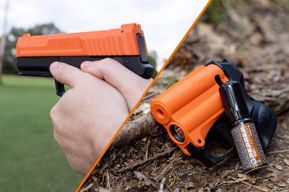
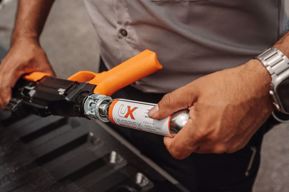
Pepper Ball Launchers These are bulkier, CO2-powered devices that need room to breathe. You have to think about secure mounting, keeping loaded magazines or loose rounds separate, protecting the CO2 cartridges from puncture, and making sure the entire unit stays at room temperature so seals don’t dry out.
Rubber Impact Rounds & Ammunition Store these like quality ammunition—original packaging, cool and dry, away from crushing weight or humidity. Moisture can swell the shells or cause the rubber projectiles to degrade. A quick visual inspection every few months catches cracked casings or faded seals before they become a problem.
The Bedroom: The Most Common Storage Location
Since most home invasions happen at night when everyone is asleep, the bedroom is the #1 storage spot for good reason. But “near the bed” isn’t enough—how it’s stored makes all the difference.
Proven Bedroom Storage Solutions
- Biometric or keypad quick-access safes mounted on the nightstand or bed frame (opens in under 2 seconds)
- Drawer-mounted lockboxes that bolt inside existing furniture
- Elevated wall-mounted cabinets with hidden release levers
- Under-mattress or between-mattress slim cases designed specifically for less-lethal tools
Simply dropping a canister or launcher into an unlocked nightstand drawer is fine for child-free homes, but risky anywhere kids visit or live. The goal is adult-speed access without open temptation.
Entry Points and Secondary Locations
Not every threat happens at 3 a.m. Daytime break-ins, delivery-person scams, and garage intrusions are all real possibilities, so smart homeowners build secondary storage into their layout.
Smart Secondary Spots
- A quick-access wall safe or concealed cabinet just inside the front or back door
- A locked drawer or pegboard mount near the garage-to-house door
- A secure shelf or hook at the top of the main staircase
- A discreet lockbox in the home office or living room where you spend the most waking hours
Pro tip: Anything near an exterior door should be hidden or locked—otherwise you risk an intruder grabbing your own tool before you can reach it.
Homes with Children: A Higher Standard of Responsibility
If kids live in (or regularly visit) your home, “less-lethal” does not mean “kid-safe.” A single spray to the face can send a child to the hospital in tears and pain. Launchers can cause serious bruises or broken skin in small hands.
Non-negotiable Best Practices
- Use only locked, quick-access containers—never “high shelf” alone
- Choose biometric safes so young children literally cannot open them
- Teach age-appropriate safety conversations instead of total secrecy
- Never demonstrate or handle tools casually in front of kids
- Consider color-coded or labeled cases so older children understand these are “adult-only emergency tools”
Quick-access safes designed for home-defense tools give parents peace of mind without sacrificing the speed adults need.
Environmental Considerations: Heat, Humidity & Reliability
Your storage spot can quietly destroy your tools over time.
Avoid these common traps:
- Parked cars (summer heat can exceed 140°F inside)
- Uninsulated garages or sheds
- Attics that swing from freezing to scorching
- Near windows with direct sunlight or heating vents
Heat breaks down the chemical potency of pepper spray and gel. Cold can thicken the formula or weaken pressure. Humidity causes rust on launcher parts and swells cardboard ammo boxes. Climate-controlled indoor spaces (bedroom closet, hallway cabinet, climate-controlled basement) keep your gear performing exactly as tested.
Should Tools Be Stored Loaded?
It depends on the tool and your household.
- Pepper spray and gel are almost always stored pressurized and ready—there’s no “unloaded” state.
- Pepper ball launchers can be stored unloaded with ammo nearby, loaded but with the safety on and no round chambered, or fully loaded inside a locked quick-access safe.
Many experienced owners prefer the “loaded but secured” option for launchers so the only extra step in an emergency is unlocking the safe. Whatever you choose, follow the manufacturer’s exact guidelines and your local laws.
Layered Storage Strategy: Primary & Secondary Access
The gold standard for serious homeowners is layered storage: Primary — Bedroom quick-access safe (nighttime) Secondary — Secured location near the main living area or entry (daytime)
This way you’re never forced to run across the entire house to reach your defense. It also acts as backup—if one safe malfunctions or you’re blocked from one area, you still have options.
Training and Household Protocol
Storage without a plan is just expensive clutter.
Sit down as a household and create a simple protocol:
- Every adult knows exact locations and access codes
- Monthly family drills (no actual tools—just “go time” practice)
- Clear rules on who calls 911 while the other retrieves the tool
- Indoor-use reminders (open windows, avoid hallways with kids, etc.)
In homes with teens, turn it into a family safety conversation rather than a secret. Preparedness feels a lot less scary when everyone is on the same page.
When Not to Store Less-Lethal Tools in Certain Locations
Skip these spots entirely:
- Kitchens (grease, humidity, and constant foot traffic)
- Bathrooms (steam destroys seals and labels)
- Near heating vents, fireplaces, or sunny windows
- Inside purses, backpacks, or shared junk drawers
Also avoid anywhere guests might stumble across them—discretion keeps awkward questions and liability risks to a minimum.
Legal Considerations
Laws vary widely. Some states treat pepper ball launchers like firearms for storage purposes; others have zero special rules. Always check:
- Minimum age requirements
- Local “safe storage” ordinances
- Rules about carrying between vehicles and home
- Any restrictions on shipping or purchasing
A quick look at your state attorney general’s website or a reputable legal guide takes five minutes and protects you from surprises.
Routine Inspection & Maintenance
Storage isn’t “set it and forget it.” Build this simple 5-minute routine every 90 days:
- Check spray/gel expiration dates and shake canisters
- Inspect launcher O-rings and CO2 cartridge weight
- Look over ammo for dents, swelling, or discoloration
- Test every lock and battery in your safes
Tools that sit for years without attention are the ones that fail when you need them most.
Balancing Readiness and Peace of Mind
You don’t need to turn your house into a fortress. You just need calm, predictable access, rock-solid security, and gear that will actually work when adrenaline is high and the lights are off.
A tool you can’t reach in time is useless. A tool that anyone can reach is dangerous.
Smart storage is the quiet bridge between those two realities.
Frequently Asked Questions
Where should pepper spray be stored in a home with children?
Inside a quick-access locked container (biometric or keypad) that keeps it away from kids while letting adults grab it in seconds.
Is it safe to store a pepper ball launcher in a nightstand?
Yes—if it’s inside a properly installed locking mechanism and stored per the manufacturer’s instructions.
Can less-lethal tools be stored in a garage?
Generally no. Temperature swings and humidity can degrade performance. Indoor, climate-controlled space is much better.
Should ammunition be stored separately from launchers?
It depends on your household risk level and the manufacturer’s recommendation, but controlled access is always the top priority.
A Prepared to Protect Perspective
Responsible storage is the unsung hero of home defense. It doesn’t look dramatic on Instagram, but it’s what separates a confident, ready household from one that’s just hoping nothing bad ever happens.
Less-lethal home defense is about measured control—and your storage choices are the foundation of that control.
Secure. Accessible. Maintained. Thoughtful.
That’s what real readiness looks like.